Introduction
We are just a few hours away from the Champions League final, and the analyst in me can’t help but look for the areas where Arsenal can hurt PSG and where PSG can impose themselves on the game.
Personally, I don’t think PSG need to change much of what has brought them here. In possession, Arsenal pose a different challenge to the one PSG faced against Bayern. Bayern could threaten through multiple elite attackers such as Harry Kane, Michael Olise, Jamal Musiala and Luis Díaz, forcing constant defensive adjustments. Arsenal’s strength lies elsewhere.
This Arsenal side may be the best off-ball team in world football right now. Their organisation, compactness and ability to control space make them extremely difficult to break down, particularly in a final where margins are small and opportunities are scarce.
That said, Arsenal cannot afford to get drawn into a pure man-to-man battle and attempt to match PSG’s intensity everywhere on the pitch. If they lose their structure or become too aggressive in their pressing, PSG have the technical quality and positional rotations to pull them apart.
One area where Arsenal do hold a genuine advantage, however, is set pieces. Corners in particular remain one of the most dangerous weapons in Mikel Arteta’s arsenal, and recent numbers suggest PSG have shown signs of vulnerability in this phase of the game.
Let’s dive into the data and explore how this final could be decided.
Arsenal’s Strengths
Arsenal's set-piece output has cooled compared to the remarkable levels they reached during the first half of the season, but since the March international break they have once again become a consistent threat from dead-ball situations. While much of the discussion around Arsenal often reduces their attacking threat to corners and free kicks, the reality is that set pieces remain one of the most effective ways to create high quality chances against elite opposition. With open-play goals proving harder to come by in recent months, Arsenal have found a healthier balance at the right time, maintaining their set-piece threat while remaining competitive in possession.
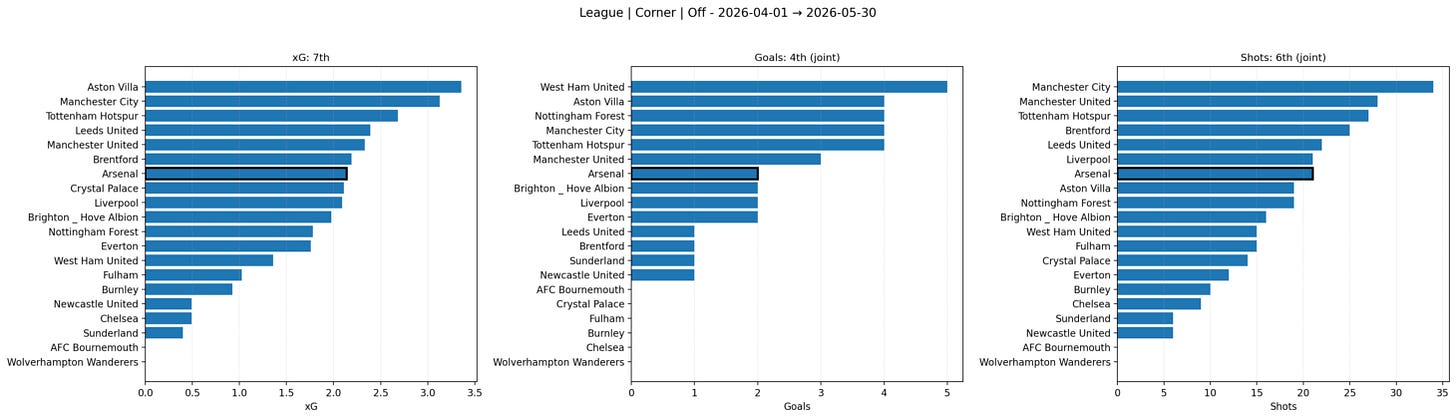
Looking specifically at corners since April 1st, Arsenal's most dangerous deliveries have generally come from the right side, targeting central areas between the six-yard box and penalty spot. However, the data also suggests a willingness to vary their approach. Alongside their traditional inswinging deliveries, Arsenal have increasingly mixed in short-corner routines and secondary actions around the edge of the box, similar to some of the patterns seen against Newcastle. The objective appears clear: create uncertainty and force defensive structures to defend multiple threats rather than simply the initial delivery.
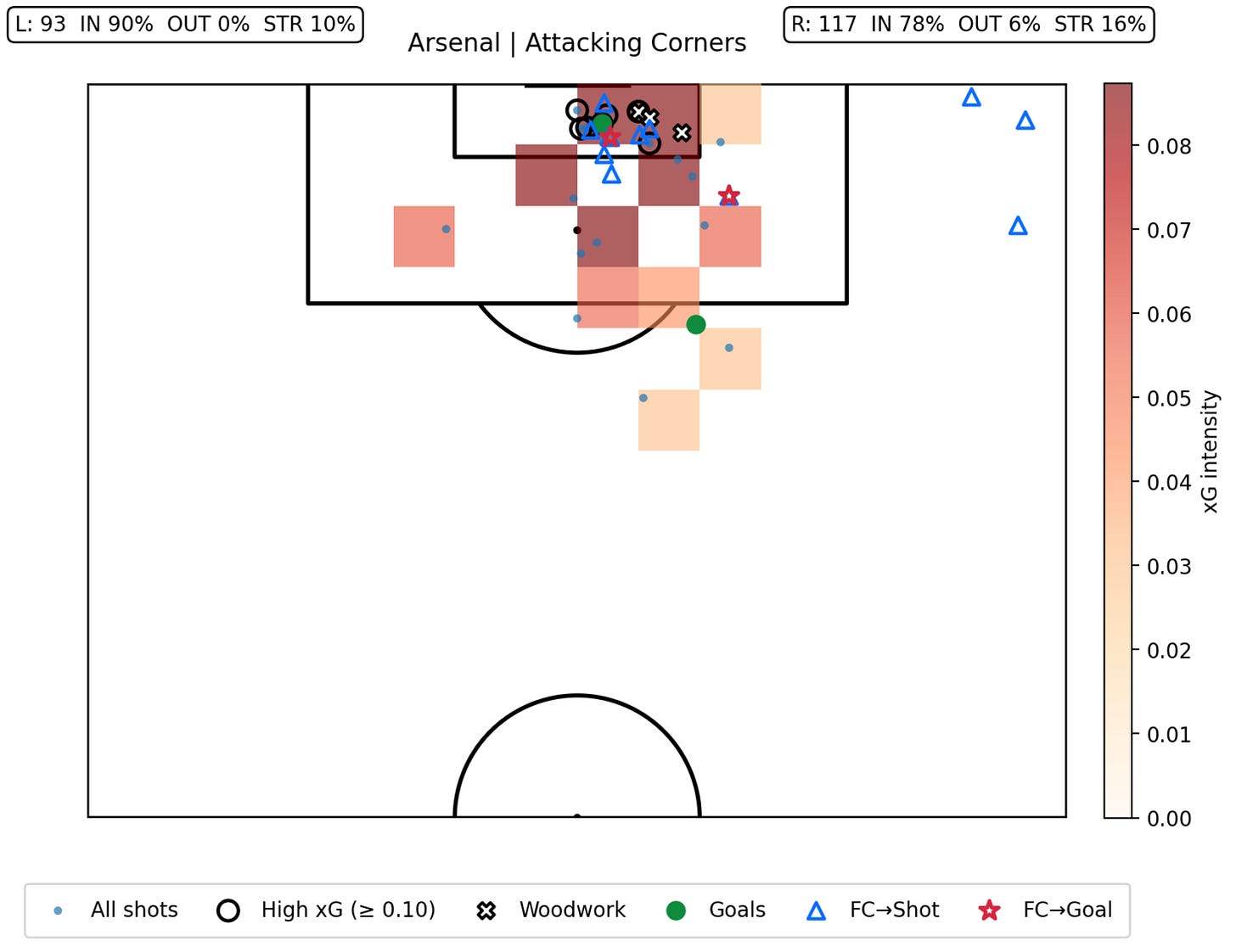
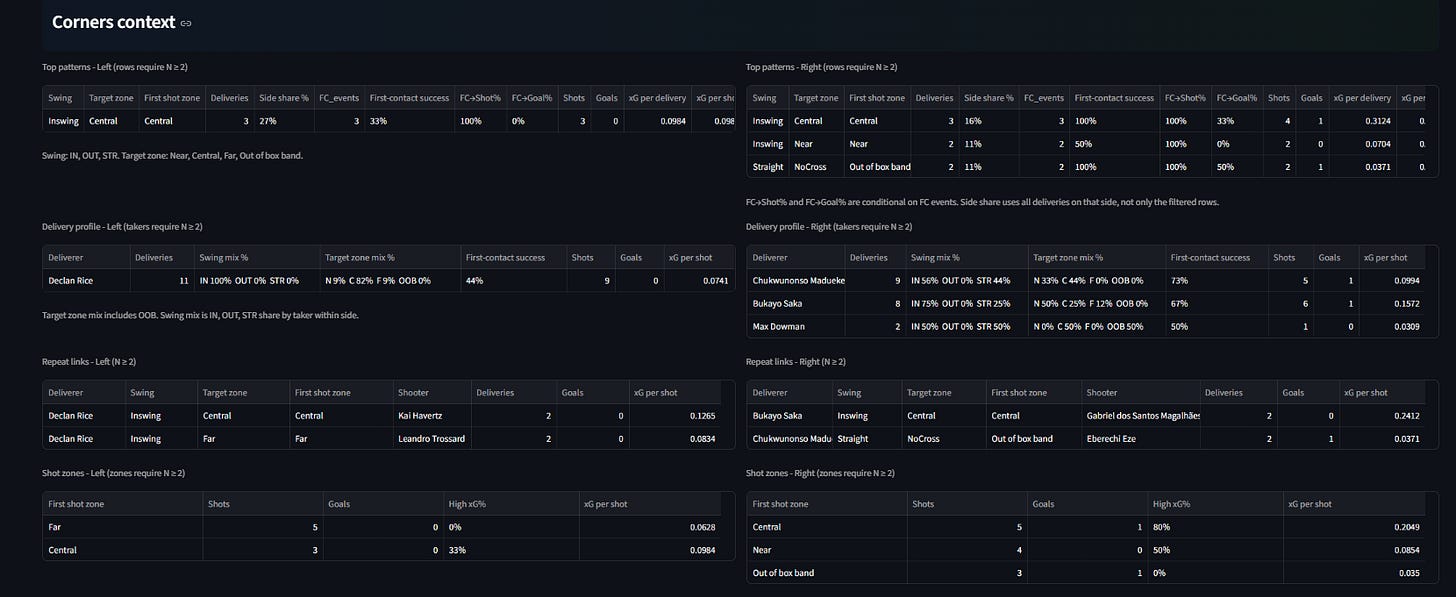
The contextual data reinforces this picture. Arsenal's most productive corner patterns are concentrated around central target zones, with Bukayo Saka and Noni Madueke generating much of the threat from the right side. Whether through direct deliveries into the six-yard area or routines designed to create second-phase opportunities, Arsenal continue to find ways of manufacturing shots from situations where margins are often smallest.
Can PSG Play Into Arsenal's Hands?
If Arsenal are searching for a route to goal, PSG's recent corner defending may offer one. While Luis Enrique's side have been among Europe's strongest teams for much of the campaign, their defensive corner numbers since April have shown signs of vulnerability. Several of the chances conceded have originated from central areas close to goal, zones that closely resemble the areas Arsenal most frequently target from attacking corners.
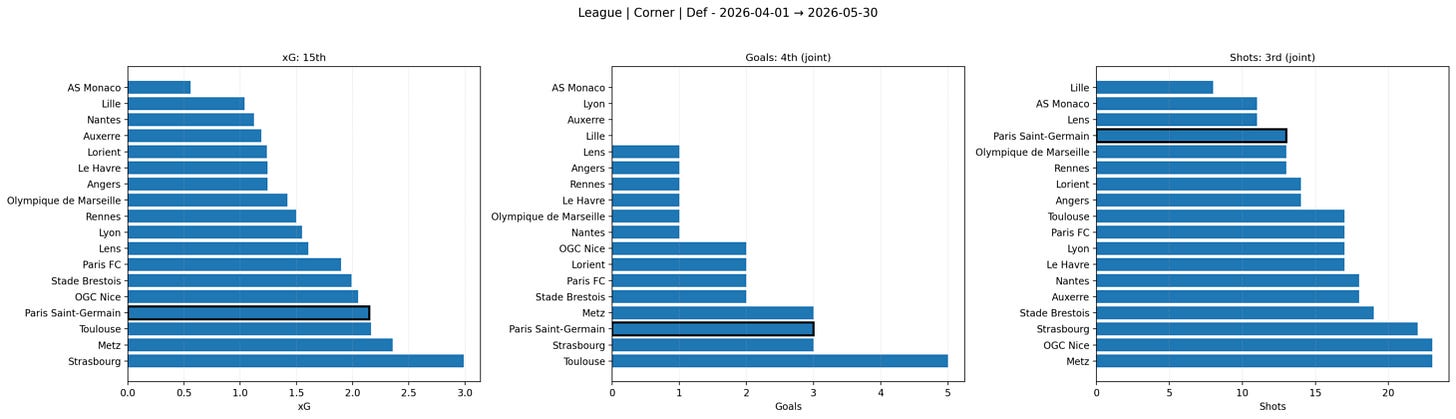
The numbers are not alarming enough to label PSG a poor defensive corner team, but they do highlight a potential weakness in a matchup where opportunities may be scarce. PSG have conceded a relatively high volume of corner shots in recent weeks and have allowed opponents to generate chances from the same central corridor Arsenal attack most aggressively. In a final likely to be decided by a handful of moments, this may be the clearest area where Arsenal's greatest strength aligns directly with one of PSG's few recent weaknesses.
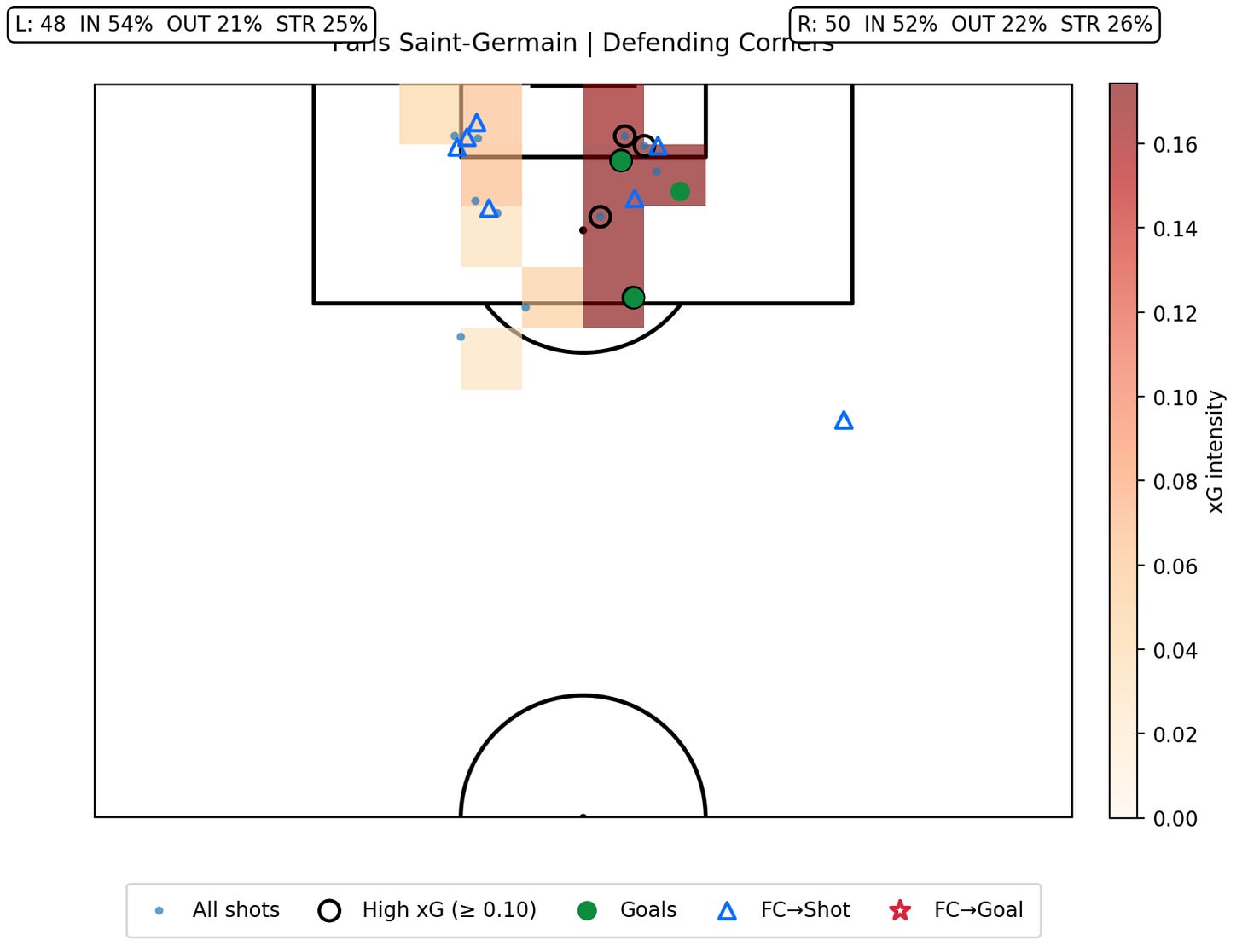
Checking the context, PSG have recently conceded several high quality chances from central areas, particularly on the right side of their defensive structure. Coincidentally, that is also where Arsenal have generated much of their corner threat since April, creating an interesting overlap between Arsenal's preferred attacking zones and one of PSG's recent defensive weaknesses.
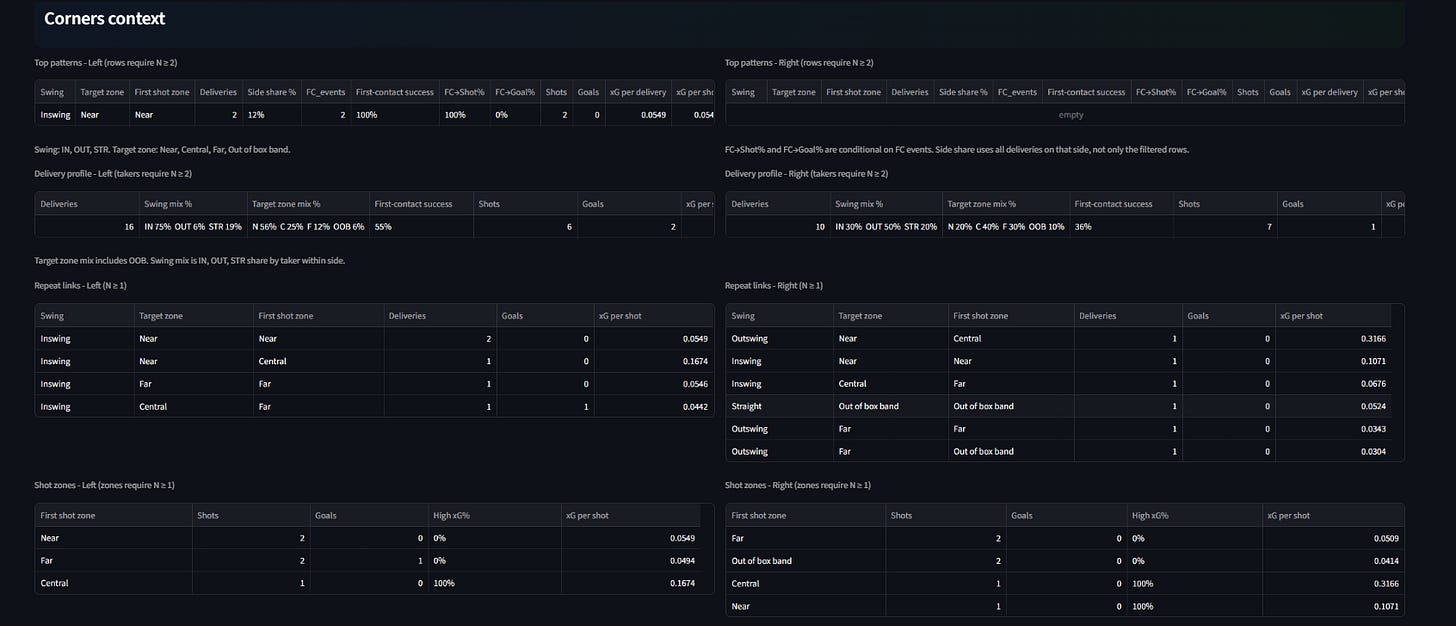
Set pieces may therefore provide Arsenal with one of their clearest routes to goal. However, finals are rarely decided by a single phase of play. To understand where the wider battle could be won and lost, we now turn our attention to open play.
Conclusion
Champions League finals are often decided by moments rather than sustained periods of dominance. Over 90 minutes, PSG may enjoy more possession and spend longer periods controlling territory, but Arsenal possess a weapon capable of changing the game from a single situation.
The data suggests a clear overlap between Arsenal’s preferred corner routines and the areas where PSG have recently shown vulnerability when defending set pieces. While PSG remain one of Europe’s strongest teams overall, their recent corner defending offers Arsenal a potential route to goal that does not require breaking down one of the continent’s most organised possession sides.
That does not mean Arsenal will dominate from corners, nor does it mean PSG have suddenly become weak in this phase of the game. Rather, it highlights one of the few areas where Arsenal’s greatest strength appears to align directly with a recent PSG weakness.
In a final where margins are likely to be extremely small, that may be all Arsenal need.