An Idea Without a Market
Rasmussen was early.
In 1978, demand for sports content existed but was unmet. Fans could only watch what networks aired. Rasmussen saw the truth: lack of supply doesn't mean lack of demand. He saw sports as ongoing, unscripted drama, content.
Lacking rights to major sports, early ESPN filled airtime with lesser events. Dismissed by many, ESPN was building bridges to a market few recognised.
Scale Meets Skepticism
Capital turned idea into business. Getty Oil, seeking diversification, invested $15 million for 85% of the company.
The real innovation was distribution. Cable, still new, gave ESPN national reach via satellite, a breakthrough. ESPN also introduced a game-changing model: affiliate fees. Instead of relying solely on ads, it charged cable operators a small per-subscriber fee, just 6 cents early on, rising to $7–$10.
Misalignment with Getty’s leadership led to Rasmussen’s exit. Later, ABC and The Walt Disney Company brought institutional weight and reach. The focus on serving unmet demand with relentless content stayed.
The Empire Phase
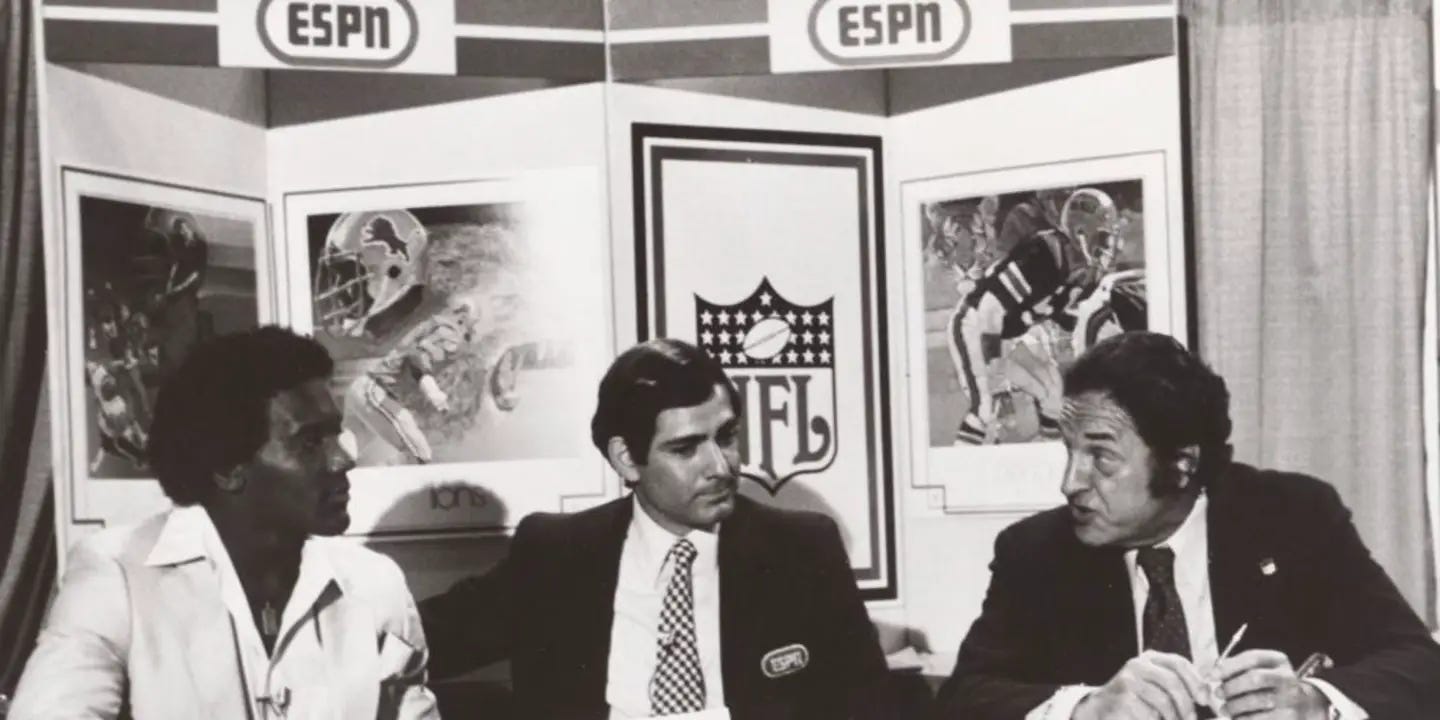
By the 1980s, ESPN was now dominant. For example, SportsCenter turned anchors into stars. College and niche sports got national attention.
By the 2000s, ESPN was a vertically integrated content machine: live events, talk shows, and original films. HD arrived in 2003.
Financially, it was a juggernaut.
At its peak, ESPN reached over 100 million households. Carriage fees alone generated $9 billion annually, a rare blend of pricing power, habit-forming content, and scale.
But as we all know, every empire faces decline. Growth becomes assumption. Assumptions become fragility.
The Disruption Phase
Today, ESPN still generates more operating income than Disney’s Entertainment segment but headwinds grow.
Cable, ESPN’s foundation, is in decline. U.S. subscribers dropped from 100 million in 2011 to ~70 million in 2023. The once-mighty affiliate fee model now leaks.
ESPN is evolving its business by expanding its digital presence through ESPN+, exploring streaming ventures with Fox Corporation and Warner Bros. Discovery, and eyeing strategic equity deals, possibly with the National Football League (NFL).
Still, challenges persist.
To survive this next cycle, ESPN must do what it once did best, see the game before it’s played.